


Local Government Budget Season, Police Oversight, and how *not* to support small businesses
TLDR: Who’s running for mayor next spring; body-worn cameras included in the city’s capital budget request; police oversight drama continues; where do we go from here, Madison?
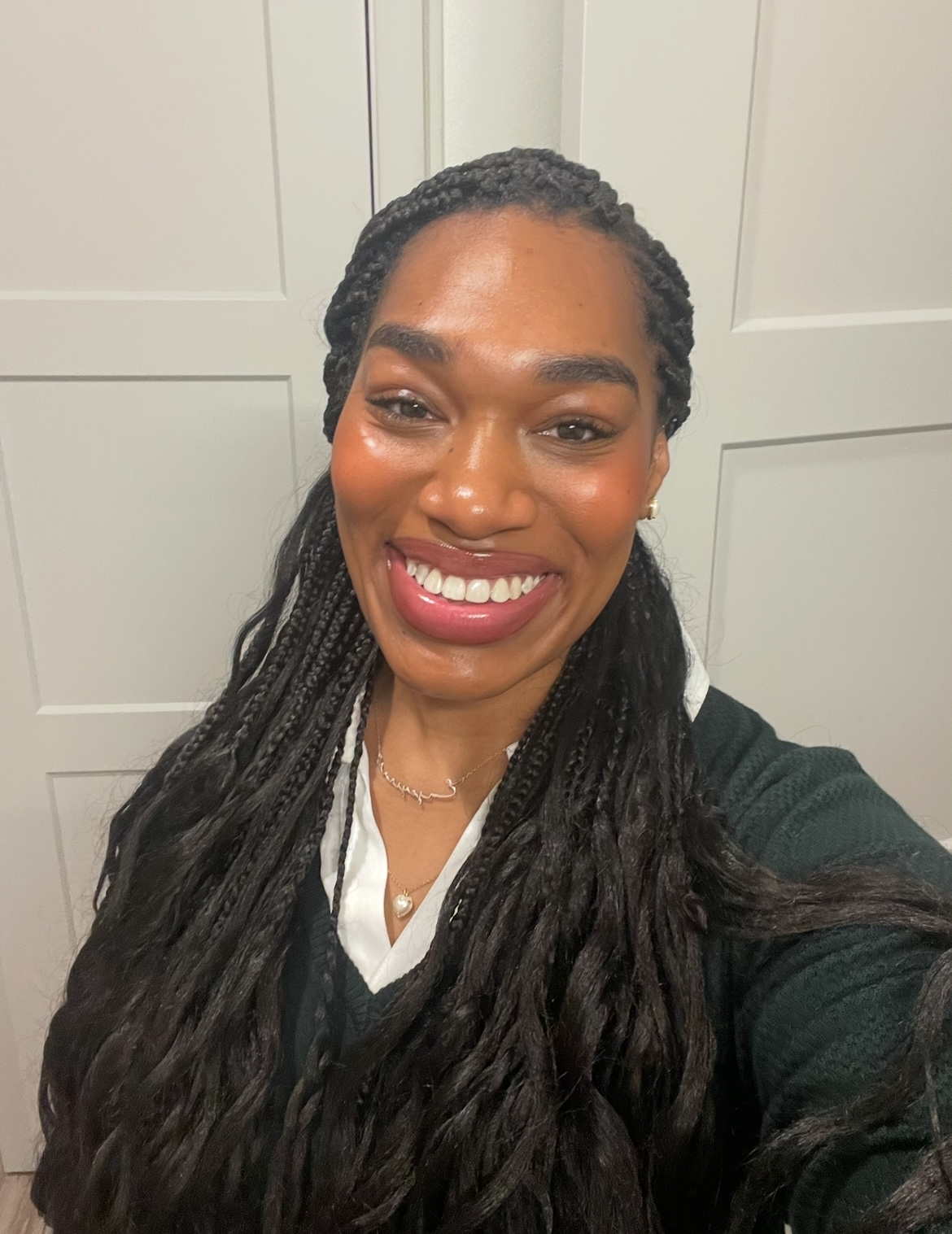
By: Enjoyiana Nururdin, M.A. | Sept. 13, 2026 | a civic journalism newsletter

Madison, Wis. — Summer’s just about over, and the past couple of weeks or so have been fairly eventful in local politics: a handful of community leaders and former elected officials announced their mayoral campaigns, kicking off the spring 2027 race; the community at large is torn about police oversight and how it should be done; a man was found dead at Madison’s men’s homeless shelter shortly before the transition into the new site; and it’s budget season at the city and county level.
Welcome to my reporter’s notebook, a newsletter for my thoughts and other tidbits I’m noodling on while covering local government in Madison for the Cap Times newspaper.
In this edition:
City Council discussions re: Corey Ruiz’s life and death
About the decision to reopen streets after the memorial encampment
Whether or not to support businesses affected by the encampment ($100k) versus ($30k) for police oversight agencies (City Council rejected funding for both.)
What I’m covering:
Who’s running to be Madison’s next mayor?🗳️
Annual municipal budget season - 2027 💰
What I’m thinking about:
City Council president creates a new workgroup for policing recommendations. It’s made up of the very people who voted NOT to fund more police oversight
What’s coming up:
The call for body-worn cameras in Madison, the case for Corey’s Law, and the cost of progressive politics.
CELEBRATE PHOTOJOURNALISM AND BLACK WOMANHOOD @ IDEA FEST SEPT. 24!
Recently in Madison’s local government…
Aside from the absolute wrench the mayoral announcements threw into my reporting plans last month, both the city and county’s budget season is here. Buckle up, because the local government just might get interesting if you’re paying close enough attention.
Who’s running for mayor?
Satya Rhodes-Conway, two-term incumbent, bureaucratic boss of the city
Brian Benford, social worker and socialist champion for the people
Syed Abbas, former City Council president & state health department director
April Kigeya, former Dane County board member, mother and change maker
Kaleem Caire, education policy powerhouse, fifth-generation Madisonian
What’s new in local government?
The leaders of the city’s departments submitted proposals last month for how much they think operations will cost next year, except they were also guided to make 2% reductions across the board — it’s getting frugal. Mayor Satya Rhodes-Conway will introduce her official executive budget of $483 million in October. Committee hearings will follow, and the council will deliberate in mid-November on both large-scale purchases (capital budget) and the day-to-day operations.
Don’t worry, I read through most of the 900-page document so you don’t have to. ;) Read the breakdown of which citywide programs and services are at risk at captimes.com
The duration of Dane County’s budget season lasts about the same time, starting mid September, with committee meetings running through October.
Long story short, Madison and Dane County will experience daunting budget challenges over the next few years, for certain. County Executive Melissa Agard has prided herself on cutting the structural deficit by half — from $31 to $ 15 million — but it’s still unclear what that means for future years. Regardless, Agard has said she’s feeling optimistic about some newer county innovations and advancements, like the proposal to turn the Veterans Memorial Coliseum into a raging concert venue (there’s a meeting on Monday, hopefully with updates), the new AI chat for non-emergency calls, and looking ahead to the new sustainability campus.
At the same time, the county Sheriff’s Office will be preparing to transition parts of the jail this winter, and community members have already been saying A LOT about this. I’ll be watching how the County Board and some of its new members work with current Sheriff Kalvin Barrett (who’s poised to be re-elected this fall) on public safety measures, such as replacing Flock Safety Cameras, which they’ll decide soon.
Local Government Watchlist: Police Oversight
Office of the Independent (Police) Monitor saga 🚨
Long story short: Interim monitor Meeka Glass, whose job it is to investigate complaints about the police department, filed a complaint against MPD for not complying with a records request regarding Ruiz; then shows up at protests and monitors police response; there’s an incident where several officers grab her AND the incident was captured via drone; THEN this week, we learn that a police officer gets a restraining order against Glass; meanwhile the City Council is losing faith in the OIM; the community is losing faith in city government; and I’m losing faith in Madison. I’m tired.
I recently wrote a piece about how the City of Madison’s public safety review committee, which analyzes budgets for the relevant departments, has been dropping the ball lately. Some of its seats have been vacant for quite some time, and I’m not sure why the city hasn’t really stepped in to address it. I’ve been trying to attend a meeting for a while, but the last couple got canceled. We need to talk about how the police and fire departments will grapple with budget cuts while calls for service increase, and not enough people are talking about it.
In the fire department’s budget request, the fire chief said he’s worried 2% budget cuts could mean scaling back the rollout of a new ambulance or reducing CARES, Wisconsin’s only 911-based alternative behavioral health response program, which is celebrating five years of service. We need to fund more CARES staff, not cut the program back.
"When someone calls 911, they're often reaching out in a moment of fear or uncertainty. For the past five years, CARES has given the team at Public Safety Communications (911) the option to send the right kind of help at the right time. CARES provides specialized support that delivers the safety they need. It's changed lives, and it strengthens our community." — a Behavioral Health Call Diversion Supervisor, Dane County 911 Public Safety Communications.
AI Surveillance and Public Safety
The main question I’m wondering is: why is the local government so obsessed with AI and surveillance when it comes to public safety? How do agencies balance personnel costs with increasing demands for service? Should there be moratoriums on Automatic License Plate Readers? Where do we draw the line?
At Madison’s police department, budget cuts could mean reducing community partner positions, or scaling back traffic enforcement. And lowkey, I actually don’t disagree with pulling back the speed patrol officers — some of the mayoral candidates (and hundreds of residents) are on the same page, too.
At the same time, the city is getting serious about pursuing body-worn cameras, and the police chief requested (~$400k) in funds for it next year in the Capital Budget. The new City Council workgroup should shed light on what the community has been saying for years and how these tools can actually impact police oversight.
Most agree that BWCs are an effective tool, not the end in itself, but many other considerations remain.
The community seems to be in a holding pattern when it comes to public safety tools being implemented without their consent or thorough deliberations on public platforms. Still, when local government implements systems like the non-911 AI (funded mostly by a state grant) or Flock (also funded via contract, kind of under the radar), the community typically doesn’t respond well.
For example, in the City of Columbus, residents have been rallying against their police chief and Mayor for allowing the use of Flock. In Stoughton on July 28, they voted unanimously to terminate their contract with Flock for the 5 cameras. And downtown at UW-Madison’s campus, a Flock camera or two have turned up broken, and I’m certain few people are upset about that.
Also, I’m tracking the two dozen locations the Sheriff’s Office wants to install Automatic License Plate Readers. Stay tuned for more info!
Book of the month!
Someone recommended Copaganda: How Police and the Media Manipulate Our News by Alex Karakatsanis. Naturally, given everything that’s been happening in Madison, this book sounds timely and important, and I’d love to bring the conversation back to the community.
“Cop-a-ganda” is a special kind of propaganda, employed by police, prosecutors, and news media. It stokes fear of police-recorded crime and distorts society's responses to it. As the United States incarcerates five times more people per capita than it did in 1970 — despite record-low crime rates— a sprawling and profitable punishment bureaucracy spends a lot of time and money to manipulate what we think that bureaucracy does and why.”
If you’re curious, join my “online book club” where you can share your thoughts and reflections in a closed group as you read (with me). I’ll try to track excerpts that stand out to me and connect them to real-world examples of how things play out in the Madison community. It should be an interesting read!
“What’s wrong with Madison?”
Since Corey Ruiz’s death on July 22, things haven’t felt the same in Madison. Although I’ve been covering local government for almost two years now, I’m still getting tired of the same conversations. The same reports, task forces, and pilot programs keep coming up, but nothing feels like it's really taken shape.
I know that’s not necessarily true, but that’s how the community feels, and it’s an accurate reflection of the bureaucratic machine that currently is Madison’s local government.
At the City Council meeting immediately after they cleared the streets, the mayor asked a question I want people to think about: “The encampment did create community, but what’s wrong with Madison that's the only place that people can find community?” Rhodes-Conway said. “How are we failing to give people the opportunity to create community every day, such that this is the way that they find it?”
Watch the full discussion here to hear what city leaders said about their role in the memorial encampment.
Freedom Inc. was one of many groups heavily present at the memorial, including behavioral support staff, members of the Party for Socialism and Liberation, the Democratic Socialists of America, and community gatherers who set up food, haircuts, games, music, reading, and art spaces for the two weeks the site was active. Then, as fast as the mayor could send a few emails, it was all gone.
Protesting in the capital city feels different right now. Anytime there’s a No Kings Protest, y’all eat it up, but when it’s about Black Lives… everybody seems to turn to NextDoor and Reddit with an attitude.
While trying to protest, police intercepted a crowd of activists and used pepper spray on people. Police arrested two women: one is an executive member of a civil rights organization, and the other currently sits on the city’s Police Civilian Oversight Board. So how do we move forward?
The community is hosting a discussion about everything at the Goodman Center’s Brassworks on Thursday, Sept. 17, from 5-8 p.m. Show up and be there.
Just a couple of my thoughts about things…
I think over the past couple of months, my larger disappointment has been in the larger discourse on social media surrounding Ruiz’s life, death, and how people are taking everything so personally. I’ve seen more posts upset about the way events were canceled immediately after Ruiz’s very public, violent death, and about “controversial” staff and the city agency that’s tasked with advocating for the community’s wants and needs for how it’s being “protected” by police, than about how we genuinely can move forward like this. I expect so much more from such a progressive and open-minded community. Still, perhaps that’s the problem with the city’s progressive politics — it’s progressive until it goes past your comfort zone and police oversight seems to have struck a nerve.
I’m admittedly a little disappointed that the City Council couldn’t find an ounce of change from the city’s rainy-day funds for the businesses on Willy St. I understand why Madison residents feel like they’re just talking to the ether and nobody is hearing them. If you can’t see how or why the community-at-large might be grieving like this, you should check your political pulse and re-evaluate what kind of world you want to live in.
Some good news:
I’ve been working behind the scenes to plan a Photojournalism Summit at The Cap Times Idea Fest this year! I’ll be moderating a discussion with Milwaukee Journal Sentinel Photo Editor Angela Peterson, followed by a special presentation from the founder of Black Women Photographers, Polly Irungu, and Sharon Farmer, the first Black White House Photo Director!!
The Photojournalism Summit will begin Thursday, Sept. 24, at the Center for Black Excellence and Culture and end the next day at the Pyle Center on the University of Wisconsin-Madison campus. Thursday’s events focus on empowering Black women storytellers, and Friday offers students opportunities to learn real-world tools of the trade from Cap Times staff and other experts.
Tickets are available at captimesideafest.com for both days together ($60) or a single day ($30). Discounts are available for Cap Times members and students get discounts. Email questions to captimesideafest@gmail.com.
I think that’s literally all I can fit in this edition of the local government reporter’s notebook!
Support this newsletter on my website www.enjoyiana.com and on LinkedIn. Stay tuned for other reflections on Substack.
Thank you for reading!
enjoyiana n.


Comments